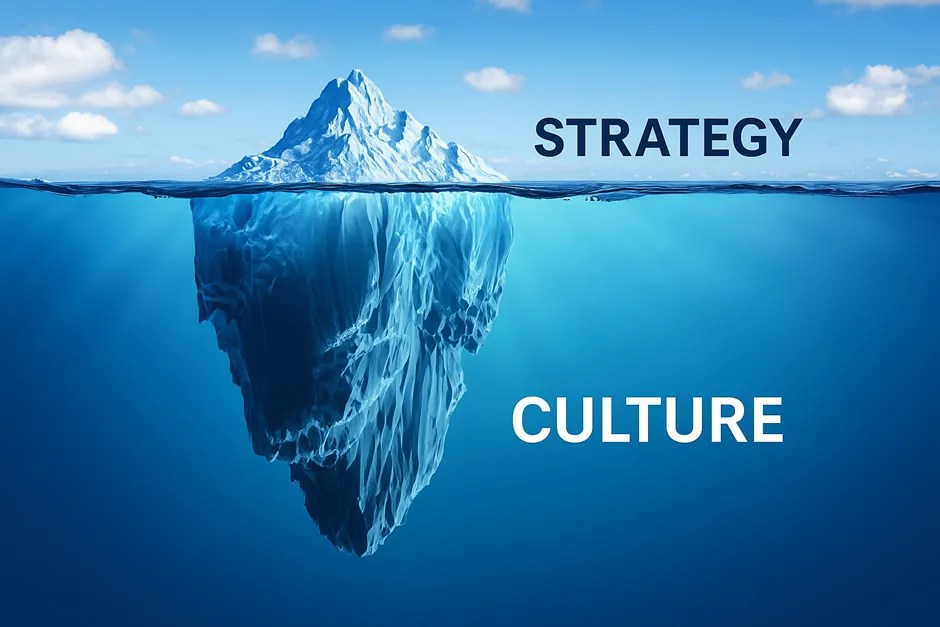
Strategy Sets the Map whereas Culture Fuels the Journey
In leadership, strategy often takes center stage, but culture quietly determines whether those plans succeed or fail. Drawing on a personal story, timeless wisdom, and fresh research, this article reveals why culture must be treated with the same weight as corporate strategy. If you’ve ever wondered why brilliant plans stall, this read will show you the invisible force that brings strategy to life.
It all started with a simple conversation.
While I was attending a leadership training program, and during one of the breaks, my colleague and I found ourselves in a lively discussion. The topic was why so many organizations pour their energy into strategy, beautifully designed plans, detailed roadmaps, and endless KPIs, while giving only the smallest nod to organizational culture. We laughed at the irony. Strategy was treated like the crown jewel, polished and displayed for all to see. Culture on the other had was the forgotten sibling, which was acknowledged, perhaps, in a mission statement or an occasional workshop, but rarely given the same sustained effort.
As we spoke, something clicked for both of us: no strategy, no matter how brilliant, can succeed if culture is left behind. Culture, in many ways, is the soil in which strategy must take root. Without healthy soil, even the best seeds fail to grow.
That realization stuck with me.
The Invisible Force
When you walk into an office or join a virtual meeting, you can feel culture even before anyone defines it. It’s in the way colleagues greet each other, how problems are solved, and whether leaders listen or dismiss. Organizational culture scholar Edgar Schein described culture as the “shared assumptions and values that guide behavior.” It’s the unwritten rulebook that quietly shapes everything.
And here’s the challenge: you can’t simply declare culture in a memo. Strategy may be written on slides, but culture shows up in habits.
When Strategy Fails Without Culture
I’ve seen it happen. Leaders launch bold strategies with great fanfare, only to wonder why, months later, results stall. The answer is rarely in the strategy itself. It’s in the culture. As Peter Drucker famously said 1, “Culture eats strategy for breakfast.” It’s a simple line, but its truth is echoed across research.
A recent Forbes report (2025) warns leaders that culture cannot be left to chance, especially now. Organizations that actively shape culture see strategy come alive and those that ignore it watch strategy wither.
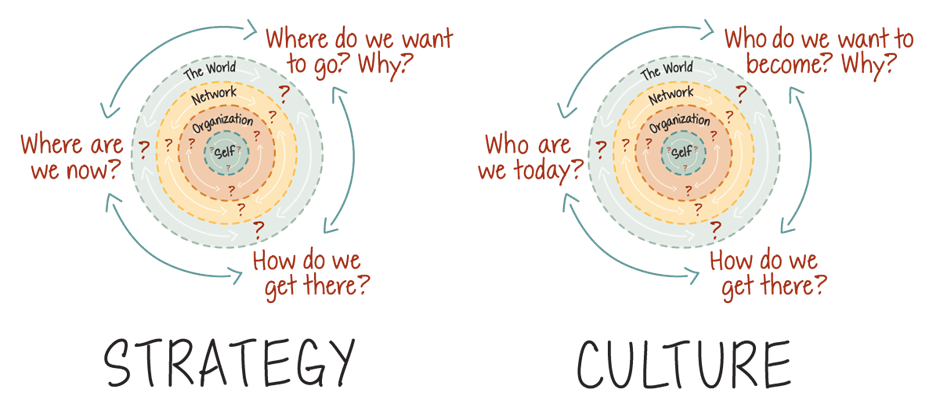
Similarly, Korn Ferry’s cultural transformation research shows that when culture and strategy align, organizations accelerate growth, boost engagement, and reduce risk. Strategy sets the map, but culture is the vehicle that carries you forward.
When Leaders Speak About Culture
The more I reflected on the link between culture and strategy, the more I noticed how often respected leaders echoed the same truth. Brian Chesky, Co-founder of Airbnb, once described culture as “a shared way of doing something with a passion.” (Spectrio) His words capture the idea that culture isn’t just background noise, it’s the energy that shapes how people work every day.
Entrepreneur Gary Vaynerchuk goes even further, reminding us that “a strong company culture helps recruit talent, retain talent, and drives strong results.” (People Insight) In other words, culture doesn’t just make people feel good; it directly fuels organizational performance.
These insights are not abstract philosophies. They are lived realities. They reinforce what research and experience already tell us: culture is no longer the “soft” side of business. It is the hard edge of strategy execution.
So What Should Leaders Do?
If strategy is the map and culture the vehicle, leaders are the drivers. They can’t hand off culture to HR or hope it forms organically. Leaders must:
- Model the culture they want to see.
- Build it into systems, from hiring to promotions to rewards.
- Measure it as seriously as KPIs, using surveys and feedback to check alignment.
- Adapt it as strategies evolve, so culture doesn’t lag behind.
The ExtensisHR 2025 analysis puts it clearly: organizations that treat culture with the same rigor as strategy see better retention, stronger productivity, and healthier brands.
That conversation during training could have ended as just another coffee-break chat. However, it planted a conviction in me: culture and strategy are not rivals, they are partners. Strategy may light the way forward, but culture is the current that carries people toward it. Leaders who recognize this don’t just set plans in motion. They create movements. And in the end, the greatest strategies aren’t remembered for how well they were written, but for how deeply they were lived.
1 Although the quote is widely attributed to him, there is no direct evidence that Peter Drucker actually said “culture eats strategy for breakfast”

