
Understanding the phases of team development—forming, storming, norming, performing, and adjourning—helps navigate change with awareness and empathy, shaping team dynamics and fostering unity. Each phase impacts how teams adapt, with early conflicts in storming eventually leading to collaboration and high productivity in performing. Leaders play a key role in supporting teams through these stages, promoting open communication, empathy, and patience to ensure both business success and personal wellbeing during times of change.
Change is a constant in our professional lives, especially when joining new teams or integrating new members. Understanding the phases of team development can explain the emotions and adjustments we face during these times, providing a roadmap for navigating change with awareness and empathy.
The team development phases play a crucial role in shaping our experiences and responses as we adapt to new team dynamics and challenges. These phases, including forming, storming, norming, performing and adjourning, each has its own impact on employees.
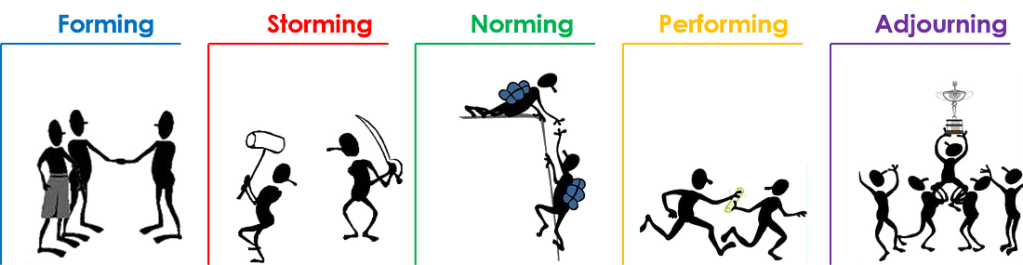
- Forming: This is the initial stage. Everyone is meeting for the first time and starting to work together. Employees may move cautiously, exploring their new relationships and trying to understand their roles within the team. It’s a time of orientation, where the groundwork for future interactions is established.
- Storming: As individuals start to voice their unique ideas and approaches, the team may encounter conflicts. This phase is critical for testing the team’s unity and resilience. It can be a period of stress and tension as members work through their differences and learn to align their goals.
- Norming: After navigating through the roughness of the storming phase, teams begin to establish norms and find their stride. This phase brings a comforting sense of stability and belonging. The anxiety of the initial stages turns into a sense of team unity and common goals, building stronger connections between team members.
- Performing: With trust and processes firmly established, the team reaches its peak efficiency. The performing phase is characterized by high productivity and creativity, where team members are confident in their roles and deeply trust one another. This is the stage where teams achieve their greatest accomplishments.
- Adjourning: For teams that come together for specific projects, this final phase involves completing the tasks and disbanding. While it can be a time of satisfaction and pride in the achievements, it may also bring feelings of uncertainty about the future as members prepare to move on to new challenges.
Having understood the team development phases and their impacts on us, let’s get back to change. Change introduces both new challenges and opportunities, often mixed with feelings of excitement and uncertainty. As our teams grow and change, experiencing moments of disagreement or pause is natural. These moments are not signs of failure but essential steps towards building a unified team.
The role of patience and understanding is crucial during times of change. Recognizing the stages our teams go through allows us to provide the appropriate support. Creating a welcoming environment from the start makes everyone feel part of the team. As the team progresses, promoting open communication and addressing any conflicts constructively are important steps in ensuring everyone feels valued and heard.
As teams move towards the norming and performing stages, emphasizing common objectives and celebrating different viewpoints can enhance collaboration and efficiency. Leadership plays a vital role in this journey, focusing on empathy, constructive feedback, and a shared commitment to growing together.
Navigating through change offers a unique opportunity for both personal growth and team development. The manner in which we support and interact with one another during these periods significantly influences our work culture and overall success. Adopting an open and empathetic approach towards change enables us to forge stronger, more flexible teams. Doing so, we turn the challenges of change into pathways for success, creating a workplace where everyone can shine.
Ensuring that everyone achieves both business success and personal wellbeing, leaders are required to demonstrate empathy, patience, and strategic insight. By guiding teams through each developmental phase with support, leaders cultivate a culture of adaptability and resilience. These qualities are essential for smoothly navigating change and securing collective success.


One thought on “Leading Change with Unity & Resilience”