Strategy is the art of seeing the road ahead and the courage to ride it with purpose, no matter how the terrain changes.
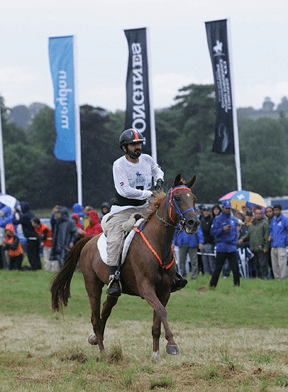
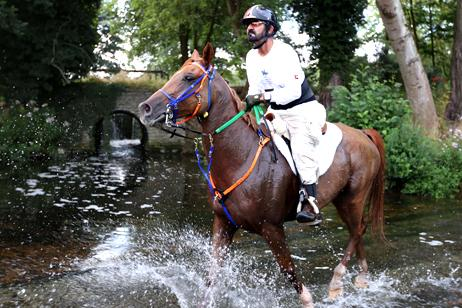
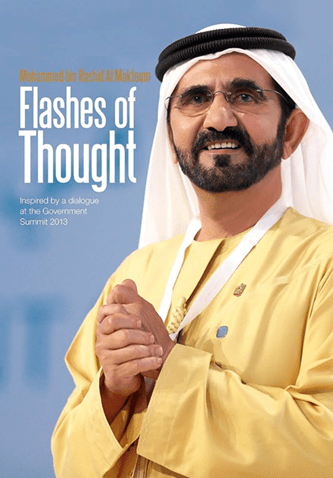
Strategy is often seen as documents, frameworks, projects, etc. However, sometimes the clearest understanding of strategy comes from a story. A moment where vision, preparation, courage, and disciplined execution meet. One of the most inspiring examples of this comes from H.H. Sheikh Mohammed Bin Rashid Al Maktoum, Vice President and Prime Minister of the United Arab Emirates and Ruler of Dubai, in his book Flashes of Thoughts, where he tells the world how he won first place in the Longines FEI World Endurance Championships 2012 in Britain. Although the event was a world-class athletic competition, hidden within the story are powerful lessons about strategic planning and management. Lessons that apply to every organization and every employee, at every level.

The story begins on the world stage with a total of 150 elite professional riders, representing 38 countries, gathered in northern Britain under unpredictable weather. The atmosphere was intense. Many riders were seasoned professionals and their horses were among the strongest and most prepared. His Highness, on the other hand, was not a full-time rider. Yet he stood there with confidence, not out of arrogance, but clarity. He understood exactly where he was, what he was facing and what his mission meant. This represents one of the main pillars of strategy, Strategic Situational Analysis:
– Understanding the competitive landscape
– Identifying constraints, risks, and environmental factors
– Knowing our mission and setting realistic assumptions
– Aligning expectations with reality
Every strategy begins with seeing the full picture.
Before the race, His Highness reviewed his horses which he deeply knew. He understood their strengths, temperaments, and abilities. He shortlisted several, planning to choose the one that best aligned with the race conditions. This wasn’t luck. It was careful analysis of internal capabilities, a crucial element of strategic planning:
– Evaluating internal resources
– Understanding strengths and limitations
– Matching capabilities to the strategic mission
When employees and organizations know their strengths, skills, tools, processes, and people, they make smarter decisions. Success rarely comes from having the best resources, but from knowing how to use what you have most effectively.
His Highness chose a horse bought six years earlier for only $20,000. That was an unexpected choice for a world championship. The horse had never competed on such a stage. But a month before the race, during a smaller event in Italy, it revealed extraordinary potential. His Highness didn’t choose based on price, prestige, or others’ opinions. He chose based on evidence, insight, and alignment with the terrain. It was an informed decision. This reflects the strategic principle of:
– Data-driven decision making
– Leveraging non-obvious advantages
– Selecting tools and resources that match the environment
– Aligning capabilities with the goal
Sometimes, strategic excellence comes from seeing what others don’t. By uncovering potential hidden beneath the surface.
The 160 km course was harsh with cold winds, sudden rain, steep climbs, sharp descents. The environment shifted constantly. No fixed plan could have survived unchanged. However, His Highness had to continuously adjust by slowing down before climbs, preserving energy before difficult terrain, accelerating on flat stretches, responding to weather changes and monitor competitors’ positions. This is the heart of strategic agility:
– Scenario planning
– Risk management
– Flexible execution
– Real-time recalibration
Every strategy requires adaptability. Conditions change, markets shift, priorities evolve and strategic success depends on our ability to respond with clarity and discipline.
In endurance racing, pushing too hard can break the horse and holding back too much can lose the race. His Highness balanced every decision. When to push, when to conserve and when to advance. This balance reflects the professional principles of effectiveness and efficiency:
– Performance optimization
– Resource management
– Sequencing actions strategically
– Maintaining momentum while protecting long-term capability
Organizations face the same challenge. Knowing when to accelerate, when to stabilize operations and when to invest in preparation. Strategy is not just planning, it is the discipline of making the right moves at the right time.
By the grace of Allah, His Highness crossed the finish line first, raising the UAE’s name among the world’s greatest competitors. However, the victory didn’t happen at the finish line. In fact, it happened in every decision made before and during the race. Every observation, every choice, every moment of discipline contributed to that final outcome. This represents the strategic alignment:
– Clear goals
– Smart resource choices
– Adaptive execution
– Coordinated action
– Persistence under pressure
When employees at all levels understand strategy and act with alignment, success is not accidental, but it becomes inevitable.
This story teaches us something deep: Strategy is not a document. Strategy is a mindset. It’s the courage to face reality honestly, the insight to choose wisely and the discipline to act with consistency.
Across organizations, each employee plays a role in the shared mission. Whether they work on the front line or manage large decisions, they move toward success when they:
– Understand the environment
– Know their strengths
– Choose the right tools
– Adapt to change
– Execute with discipline
Just like the 160 km race, their journey will have moments of challenge and moments of opportunity. Their strength lies in how they prepare, how they adapt and how they continue moving forward together.